
Ceramic vs. Carbon Tint: What Utah Heat Actually Does to Your Car
A 110° parking lot in July is a materials test. Here's how the two films we install hold up, what the numbers really mean, and how to pick without overpaying.
Quick answer
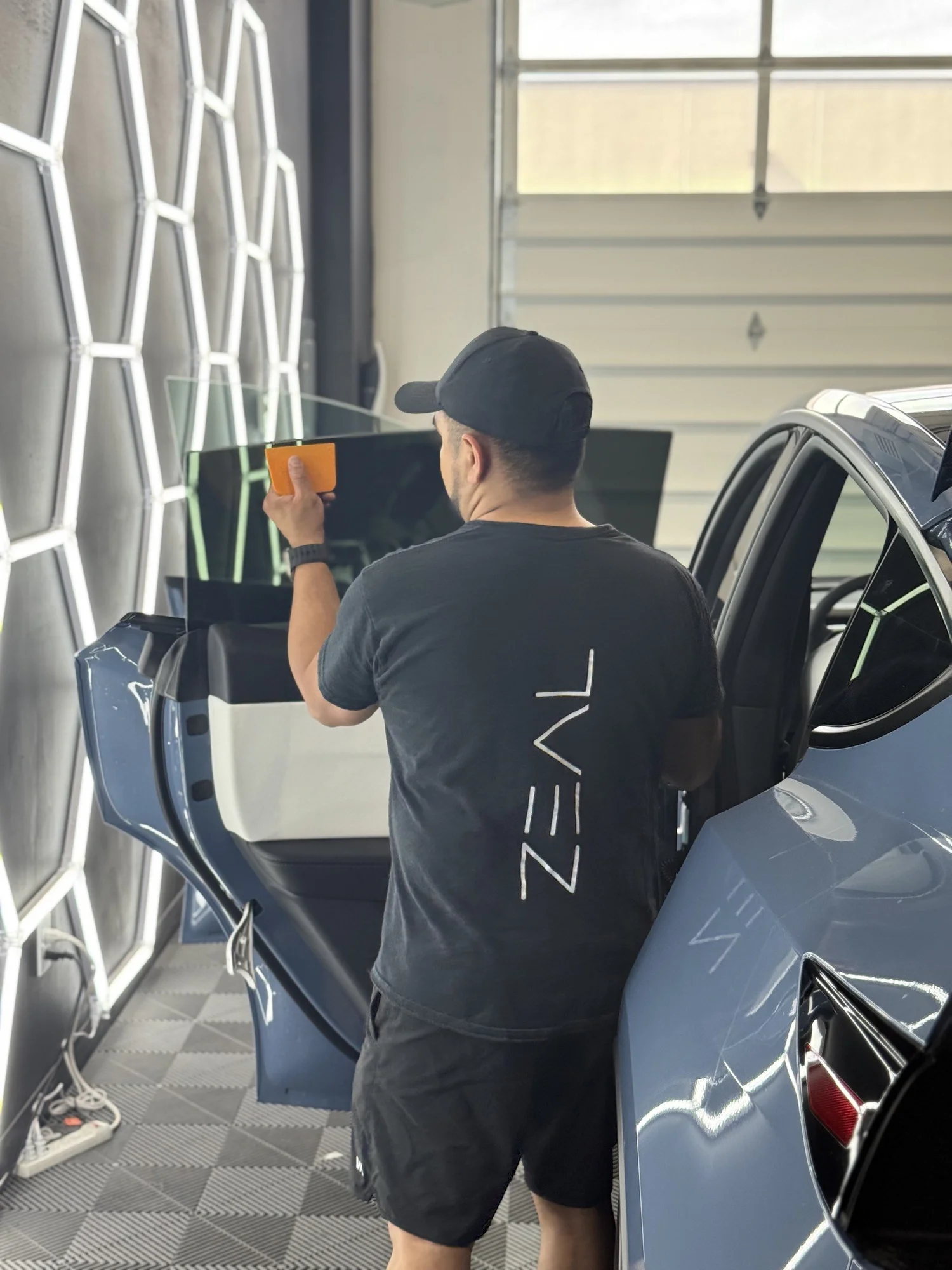
For most Utah drivers, nanoceramic tint is the right call: it rejects up to 96% of infrared heat versus about 67% for hybrid carbon, while both block up to 99% of UV. Carbon is the better value on a garage kept car or a second vehicle. Neither film affects phone, GPS or radio signal. Utah law requires at least 35% VLT on front side windows, and allows full windshield coverage at 70% VLT, a 5% visor strip down to the factory marked line at the top of the windshield, or both.
- Service
- Ceramic & carbon window tint
- Starting investment
- From just $79 per window
- Install time
- 1 to 5 hours
- Warranty
- Up to lifetime, film + install
- Utah legal limit
- 35% VLT, front sides
Heat is the whole argument. Every tint on the market will darken your glass, but only the film's infrared rejection decides whether your steering wheel is usable at 2pm in a Bluffdale parking lot.
Why Utah is hard on interiors
Elevation thins the atmosphere, which means more UV reaching your dash than the same summer afternoon at sea level. Add 100°+ surface temperatures and you get the two failure modes we see most: cracked dash tops and door cards that fade unevenly along the window line.
Tint doesn't stop that entirely. It slows it down by years.
What the numbers on the box mean
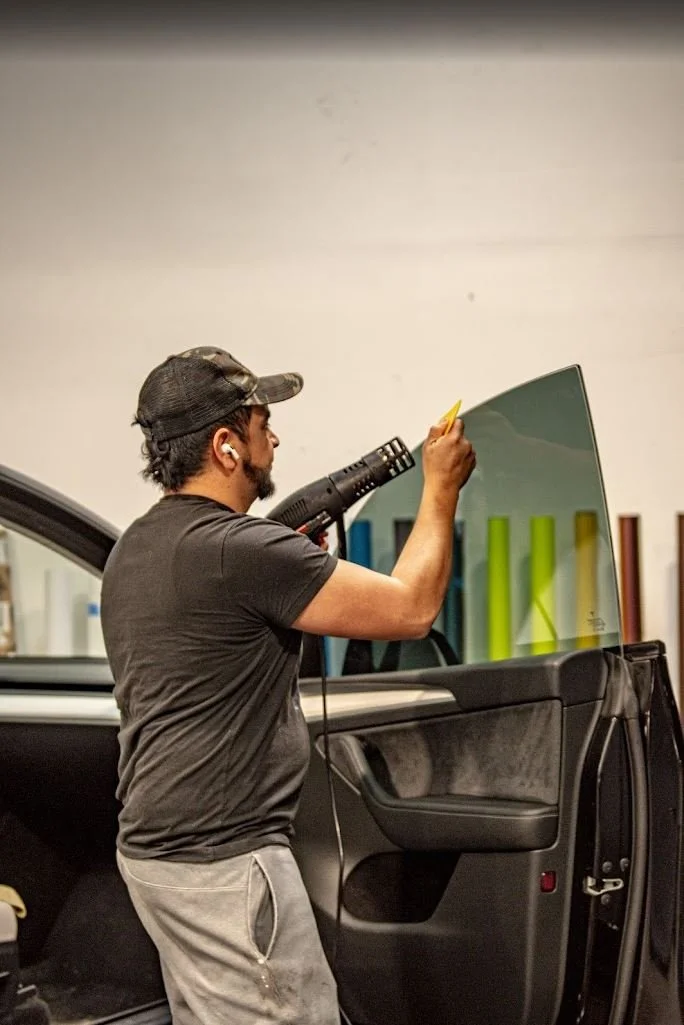
Three specs matter, and only one of them is about darkness:
- VLT is visible light transmission. How dark it looks. This is the legal number.
- IR rejection is infrared heat blocked. This is the comfort number.
- UV rejection is what protects your interior and your skin.
Shop tip: A 5% limo tint with poor IR rejection can feel hotter than a 35% ceramic. Dark is not the same as cool.
Ceramic vs. carbon, side by side
| Spec | NanoCeramic | Hybrid Carbon |
|---|---|---|
| IR (heat) rejection | Up to 96% | Up to 67% |
| UV rejection | Up to 99% | Up to 99% |
| Signal interference | None | None |
| Warranty | Lifetime, film + install | 5 years |
| Starting investment | From just $99 | From just $79 |
Coverage tiers
Most people don't need the most expensive option. They need the right one for how the car actually gets used.
Hybrid Carbon
- Up to 67% IR rejection
- Up to 99% UV rejection
- Nonmetallic, no signal loss
- 5 year warranty
NanoCeramic
- Up to 96% IR rejection
- Up to 99% UV rejection
- Noticeably cooler cabin
- Lifetime film + install warranty
Ceramic + Windshield
- All side and rear glass
- Clear ceramic windshield film
- Biggest drop in cabin temperature
- Lifetime film + install warranty
Starting investment only. Glass size, curvature and old film removal change the number.
If you park outside every day, ceramic pays for itself the first summer.
Zeal Restyling install team
Before you book: give the film 3 to 5 days to cure before rolling windows down. Haziness and small water pockets during that window are normal.
Common questions
Is window tint legal in Utah?
How long does the install take?
Will tint interfere with my phone or GPS?
Why is nanoceramic tint more expensive than dyed film?
Let's get it on the schedule
Certified installers in Bluffdale. Serving South Jordan, Riverton, Draper, Herriman, Lehi and the greater Salt Lake Valley.
Read next
Rock Chips on Interstate 15: Where PPF Pays for Itself
What film stops that a ceramic coating can't, plus coverage tiers and real care advice.
Read the post →
Vinyl Wrap or Color Change PPF? What Each One Buys You
Both change your color. Only one stops a rock. Investment, warranty and lifespan compared.
Read the post →